
Berlin Resident Records by Question
The question shapes the search. Berlin courts, Berlin voter records, Berlin vital files, and Berlin licenses each expose a different set of fields. Keep the source, the date, the record type, the name, and the access rule together, because a name-only search can return several people or several kinds of records. Pick the source that can actually confirm your fact. MapXpress identifies a parcel owner and location. MyVote answers a voter-facing question. Courts show indexed case information. Vital records and probate carry their own access rules. Business and credential systems show an affiliation, not a household.
| Record | What it can confirm | Where to search | Access |
|---|---|---|---|
| Assessor / GIS parcel | Owner, situs, mailing address, MBL, sale and building fields | Berlin MapXpress | Free public search |
| Voter registration | Status, district, party, public residence fields, and history categories | Connecticut MyVote or registrars | Public fields and safety rules apply |
| Civil party index | Party name, case name, docket, court, party number, and document link | New Britain Judicial District portal | Free index; retention limits |
| Criminal or motor-vehicle index | Defendant, court, next activity or status, hearing, and docket | New Britain pending search | Current or pending index, not complete history |
| Vital or probate record | Event, estate, fiduciary, or family-history facts | Berlin, DPH, or PD-08 | Eligibility, copy, and confidentiality rules |
| Business or credential record | Entity, principal, agent, credential, status, or address | SOS Business Search or eLicense | Free public search; affiliation only |
Addresses and parcels narrow things fast. A court location works better once a search spans the whole state. For a historical question, a date does the job. The best first step is whichever one cuts down the possible people without stretching what the record can prove.
Verify the Right Berlin Resident
The hard part of a Berlin resident lookup is not finding a matching name. It is proving the match belongs to the right person. A single shared name is not identity. Berlin records carry Berlin, Kensington, East Berlin, Berlin Station, and New Britain labels across different years, so a current owner, an old city directory resident, and a court party can all be real people with the same name.
Treat the lookup as a routing step. Compare the town label, the address, the date, and the custodian before calling a match the same person. A Berlin match grows credible when the court, the parcel, the directory, the year, and the spelling all agree. Only then does the residents directory point to a confirmed resident rather than a coincidence of names.
- Normalize the name. Save spelling, initials, suffixes, maiden or former names, accents, and the search order used by each portal.
- Anchor the name to place. Compare a MapXpress parcel, voter district, court location, business identifier, school record, or recorded instrument.
- Cross-check two independent record types. Use dates, middle initials, relatives, parcel IDs, spouse or business information, and address fields where the source lawfully displays them.
- Separate time slices. A 1930 directory, a 1950 census, a 2021 sale, and a current parcel record do not answer the same question.
- Ask the custodian for the official copy when the result matters. State the docket, instrument, certificate, or parcel record needed and ask about certification.
- Docket
- The court's identifier for a case. It helps separate people with similar names and directs a clerk to the right file.
- Index versus image
- An index is a searchable pointer. An image is the scanned or filed document and may require a fee, account, or clerk request.
- Certified copy
- A copy issued or attested by the custodian as an official copy. A web row or downloaded index is not automatically certified.
Berlin Resident Names in New Britain Courts
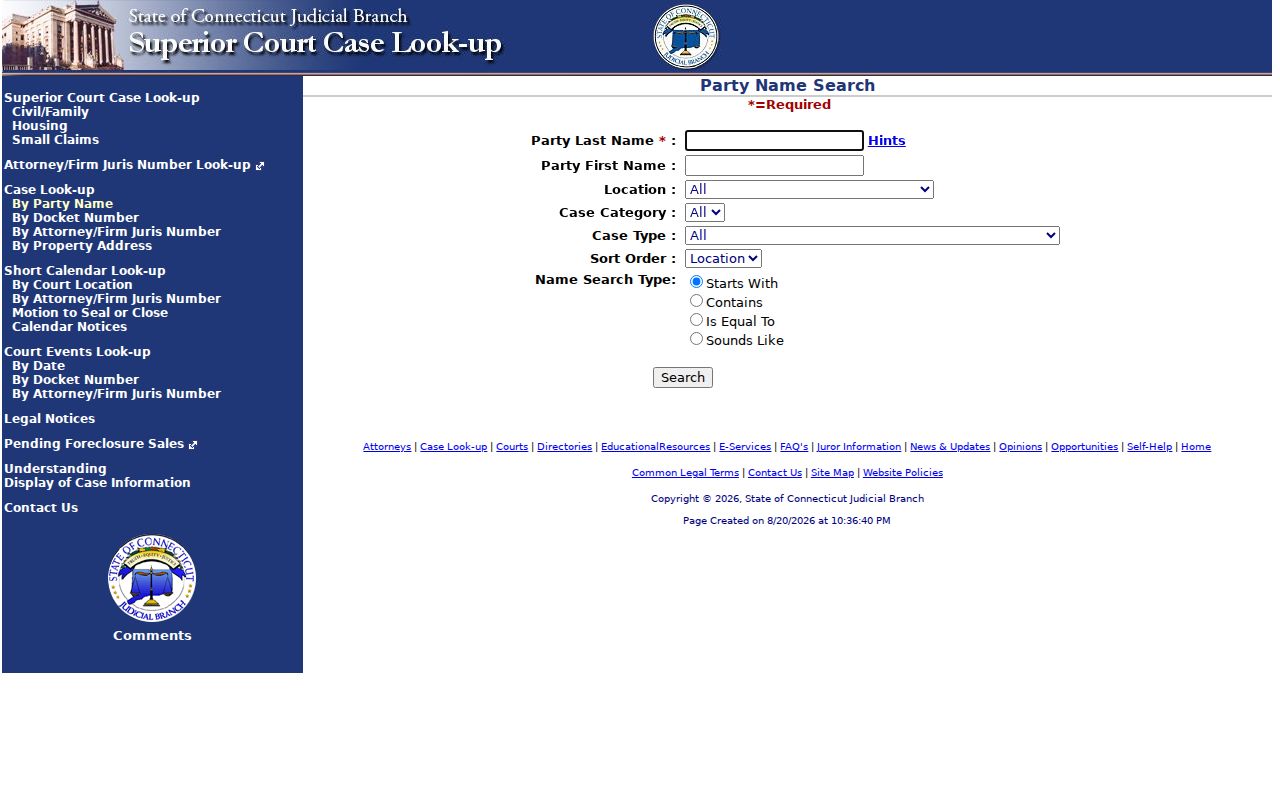
Berlin cases are routed through New Britain. Keep the court location, docket, and party number with every result. Berlin falls under the New Britain Judicial District. The civil party portal takes a required last name. It also accepts an optional first name, location, case category, case type, sort order, and match mode. Select HHB-New Britain or the correct New Britain location before judging what comes back. The criminal and motor-vehicle search uses a defendant surname and an optional first initial. It also needs a birth year or year range, a court location, and a category.
The civil result can show Party Name, Case Name, Docket Number, and Court Location. It may also list Party Number, a self-representation flag, and a paperless-document icon. The pending criminal result lists Defendant, Birth Year, Court, and Next Activity or Status. It also shows Date, Hearing Type, and Docket Number. Remember that a pending row is not a disposition. A court index is never a complete history.
For civil name work, the Connecticut civil party search is the first stop. The pending side lives at the Judicial Branch criminal and motor-vehicle page.
Web retention varies by case type. Sealed, protected, juvenile, erased, and confidential family materials may simply be absent. When a web result is not enough, ask the New Britain clerk for the file, an ordinary copy, or a certification.
Berlin Resident Records: Same-Name and Stale Traps
A same-name result can join an old Berlin address to a different person. Date, middle detail, and source type are the checks. MapXpress may show one owner string for a parcel, including a condominium unit or a multi-owner comment. MyVote may delay or protect information during list maintenance. Court portals will search every Connecticut location if the filter stays broad. An obituary may use a nickname or misspell a family name, and SOS or eLicense records may list a legal entity or professional address instead of a residence.
Build a small comparison note. Put the exact name, source date, address type, location, record number, and confidence beside each hit. A same-name match becomes useful when the parcel, middle initial, spouse, relative, business identifier, or date also agrees. If only the name agrees, write the record down as unconfirmed.
No result does not mean no person. It may mean a protected voter record, a restricted birth record, a sealed or erased case, a different historical label, a stale portal, or a record held offline by the records office.
Berlin Resident Lookup: MyVote and the Public File
Connecticut MyVote answers one narrow question at a time. A Berlin voter can confirm registration status or find a polling place there. The live screens change, so follow the labels the application shows rather than an assumed form. The full voter file is something else entirely. It is a separate Secretary of the State request, not a wider version of the public lookup.
State guidance splits the file in two. Public items include name, residence and district information, party affiliation, status, registration history, birth year, and election history after local updates. Ballot choice stays sealed. So do the Social Security number, full date of birth, signature image, and protected safety information. The request form lists a $300 CSV fee. Allowed uses cover election work, scholarship, journalism, politics, and government. SOTS voter privacy guidance explains the split.
Berlin registrars maintain the local record itself. Send any correction to them first, and never read a MyVote non-match as proof that someone has no tie to Berlin.
Berlin Vital Records Have Access Rules
A vital search starts from one event. Eligibility, date, and custodian decide the route. The Berlin Town Clerk and Registrar of Vital Statistics keeps the local copies for Berlin, East Berlin, and Kensington. Statewide electronic and state copies sit with DPH from July 1, 1897 forward. A town request is often faster. State copies carry their own forms, fees, identification rules, and processing guidance.
Age rules matter here. Birth and fetal-death records under 100 years are restricted under CGS §7-51. Once a birth record passes 100 years, it becomes public subject to redactions and confidential files. Anyone 18 or older may buy certified marriage and death records under CGS §7-51a. Social Security number sections carry separate restrictions. A divorce decree is different. It comes from the Superior Court, not DPH.
The Berlin birth form asks plenty: certificate name, date and place of birth, parents' names, requester address and contact information, relationship, reason, signature, identification, and payment choice. Use the official Connecticut DPH forms directory and the Berlin Town Clerk route for the exact current form. That pairing avoids outdated paperwork.
Berlin Resident Probate and Heir Research
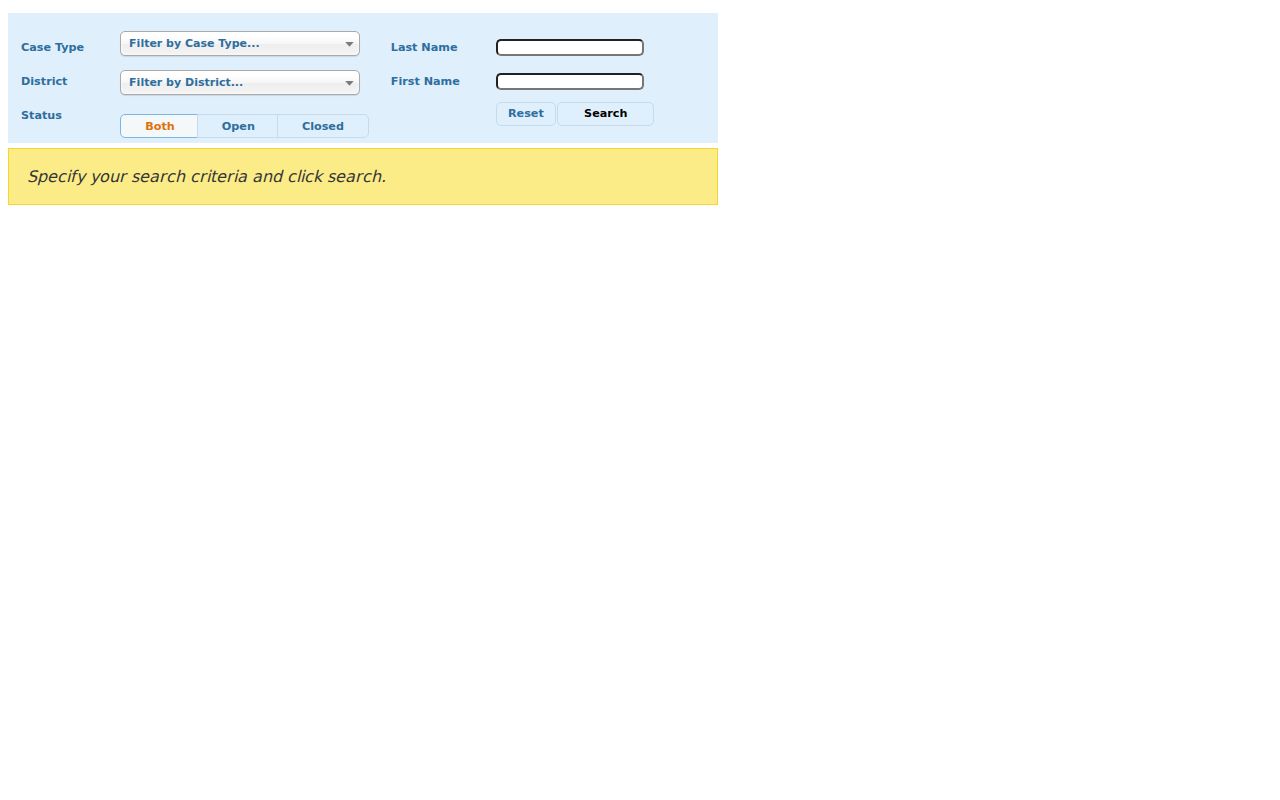
Probate files can tie a decedent, an heir, and an estate case together. You still need the district and case context. Berlin Probate District PD-08 sits in New Britain. The public lookup reaches back to January 5, 2011. It searches case type, district, status, last name, and first name. Results can show a case number, name, type, district, status, and links where available.
Older books follow a different path. Pre-2011 filings live with the court, the State Library, or an archive route. For an estate question, search the decedent's name first. Save the case number and status, then ask the clerk which papers are public and whether a certified copy exists. The official starting point is the Connecticut Probate case lookup.
Cross-check any probate date against a deed, obituary, cemetery record, or vital certificate. Keep confidential filings out of a general name search.
Berlin Resident Names in Yearbooks
A yearbook fixes a name in a school year. It does not fix a residence. Pair each Berlin entry with a dated address source. Berlin High School yearbooks from 1937 through 2010 can reconnect a former classmate or establish a dated school relationship. Berlin-Peck links digitized copies through Internet Archive. Print copies sit in the Local History Room. Search the image and the OCR text together. Automatic recognition misreads letters often enough that names deserve a check on the page itself.
A yearbook yields a school, class, photograph, activity, or local affiliation at one point in time. For a current address, turn instead to the Historical Name Index, a newspaper notice, a public civic record, or a lawful current record question. When the goal is a household's historical address rather than one class year, the Berlin city directory collection route is the better fit.
Berlin Resident Business and Credential Records
Business and license records anchor a name to something verifiable. The listed address stays a separate clue. The Secretary of the State business search accepts a business name. It also accepts a Business ALEI or filing number. Results can show the entity, principal, agent, formed date, type, address, and an annual-report link. Berlin trade names file with the Town Clerk. State guidance lists a $20 municipal filing fee.
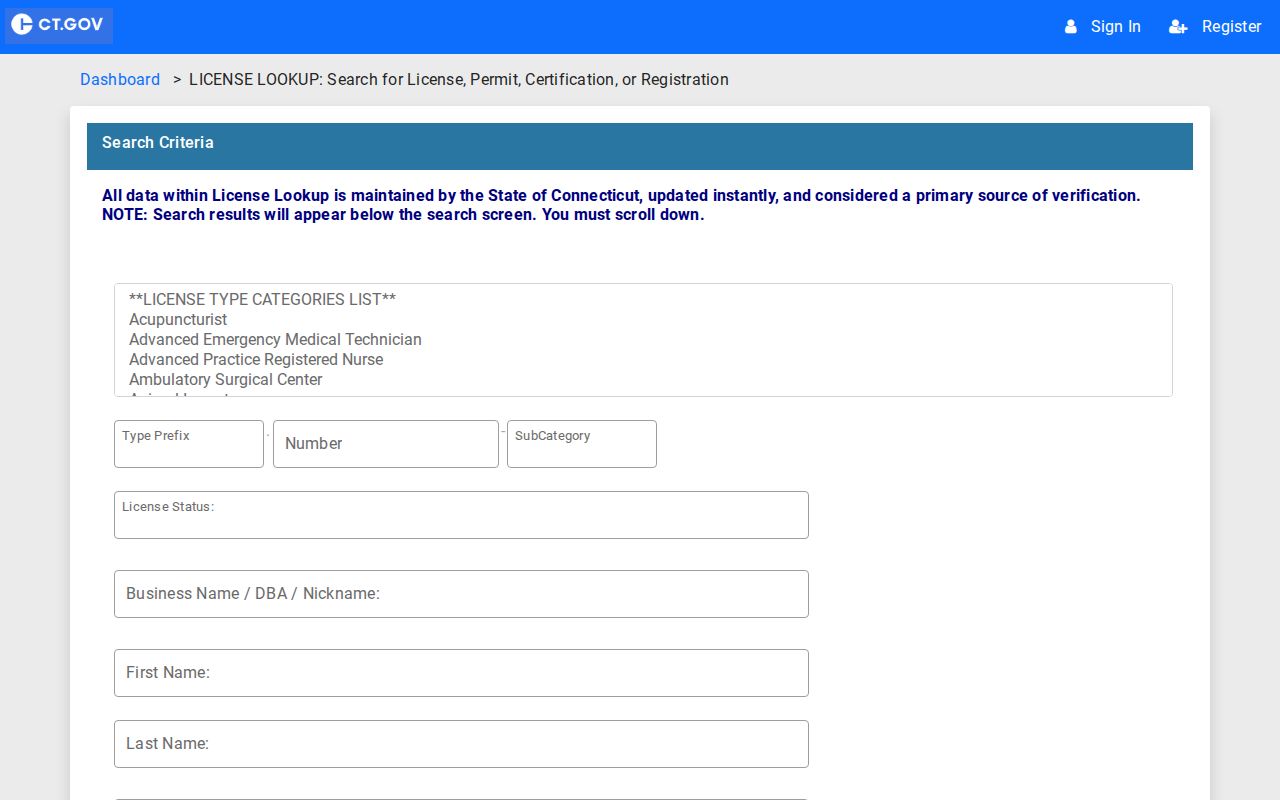
eLicense takes many angles. It searches license type, prefix or number, status, business or DBA, first and last name, address, city, ZIP, and state. The roster download adds specialty and practice-city filters. These records confirm an entity or credential status. But they do not prove where a person lives now. The official credential search is Connecticut eLicense.
Common names need more than a name. Use the legal entity or credential number when searching, and keep the organizational address separate from any claim that it marks a residence.
When a Berlin Resident Lookup Stops
Every search has an edge, and a Berlin resident lookup stops at sealed, confidential, protected, or unindexed material. When a Berlin result ends, note the Berlin office, the search terms, the date, the access limit, and the follow-up route. Berlin custodians can explain the lawful next request.
Some records stop at an online boundary. The land index runs out at a certain year, and older books, images, counter access, and microfilm sit behind it. Court information can vanish under retention or sealing rules. Vital records can require eligibility. Historical Name Index entries run thin. MyVote's visible fields shift with the live interface, and the complete voter file is a paid, restricted request.
For a public agency record, the Connecticut Freedom of Information Act, Chapter 14, CGS §§1-200 through 1-242, is the path. Name the custodian, the record class, the person or parcel, the date range, and the format you want. The Town Clerk, Assessor, registrars, New Britain clerk, DPH, and State Library each hold their own files. Berlin's general request form is a contact route. It guarantees no unstated search.
Uncertainty is a stopping point. When a result matters, ask the custodian for the official file instead of filling the gap with a third-party profile.
Legal Limits on a Berlin Lookup
A Berlin lookup has legal limits. Use Berlin records for a lawful question, keep the Berlin source and date, and never turn a lookup into a claim about a private person. Names alone open nothing. Stop when the source fails to establish the fact. That standard covers Berlin names, addresses, voters, court entries, and historical records alike.
Birth records under 100 years stay closed. Adoption files, protected voter records, sealed or erased court matters, DMV data, and protected police information are not open simply because a name is known. The Connecticut Address Confidentiality Program and the voter privacy program protect different records. Neither program erases every other public entry.
Lawful use. A Berlin resident lookup is for personal, lawful research. Public access does not permit stalking, harassment, threats, intimidation, or harm. Verify the source and date with the custodian before relying on a result.
A wrong record goes back to its holder. The Berlin Assessor fixes parcel data. The Town Clerk or registrars handle town records, SOTS for voter data, the Judicial Branch for court files, and DPH or the local registrar for vital amendments.