
Berlin Neighbor Sources by Address
Berlin block research compares Berlin GIS, Berlin parcels, Berlin deeds, Berlin voter fields, and Berlin civic contacts without creating a private roster.
A block lookup is a bundle of narrow sources. The GIS map shows geography. The Assessor supplies a parcel owner and mailing field. SearchIQS supplies recorded instruments. A historical directory or Sanborn sheet may add a dated street or building clue. Civic programs can explain how to connect with a neighborhood without publishing private membership information.
| Source | What it shows about a block | Access |
|---|---|---|
| MapXpress parcel viewer | Adjacent polygons, owners, parcel IDs, location, and active layers | Free web map; click and browse |
| Assessor property search | Owner, mailing address, property card, sale, value, and building fields | Free; one parcel search at a time |
| SearchIQS land records | Deeds, mortgages, maps, liens, and foreclosure registrations | Guest index; images vary by access |
| Voter record | Lawfully public residence, district, party, status, and history fields | MyVote or restricted file route |
| Historical directory or Sanborn | Dated names, address sections, footprints, streets, and landmarks | Library, archive, or LOC route |
| Police Block Watch and civic records | Community contact, public meetings, and named officials | No public member roster |
The sources overlap in place, not in meaning. A parcel boundary is not a personal relationship, and a public meeting name is not a block directory.
Map Berlin Neighbor Parcels by Address
A Berlin neighbors search begins with the Berlin target parcel, then reads the Berlin polygons, Berlin street line, Berlin layers, and Berlin date.
The Berlin GIS viewer does not document an automatic radius or buffer search. The reliable neighbors method is a visible map walk. Start with the target parcel, preserve its identifier, and inspect the polygons that touch or sit directly across the street.
- Open the Berlin GIS parcel viewer and search by address, parcel, or the MapXpress result link.
- Select Parcel Information and save the target MBL, Unique ID, street, house number, and owner or mailing fields.
- Zoom out one or two levels. Use visible parcel polygons, street names, and an aerial or planimetric base layer to identify adjacent parcels.
- Use Multi Select for a group along a block or street segment, then open each selected parcel's information link.
- Preserve the map view, active layer, and date. Use Measure Tools for distance only, not as a relationship or people search.
This process finds the geography around an address. It does not create an automatic list of all people nearby.
See the Berlin GIS parcel viewer before the map image; its Berlin controls support a visible parcel walk rather than an inferred Berlin household search.
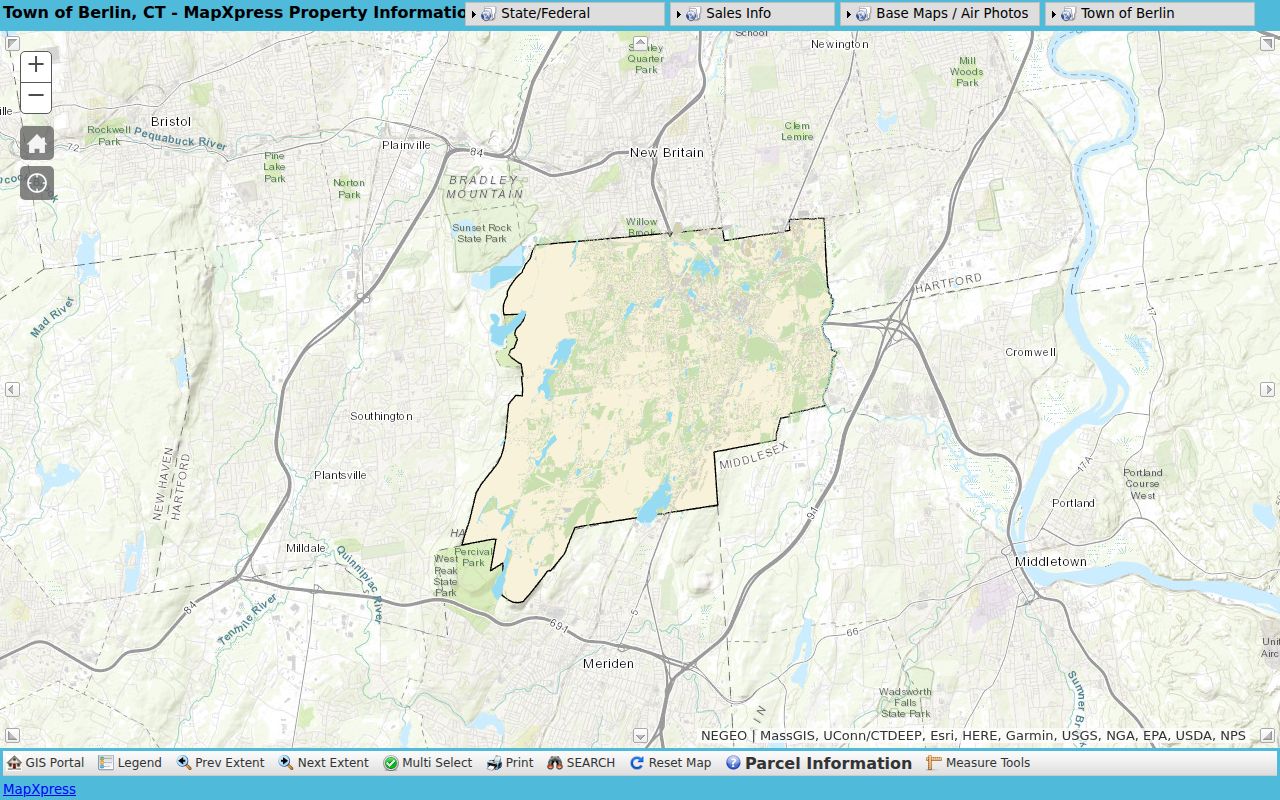
The viewer's map controls support a careful block walk, with the target parcel as the starting point.
Berlin Neighbor GIS Layers Explain the Block
Berlin's GIS layers give a Berlin block its land, sales, aerial, wetland, utility, school, and open-space context.
Layers add context to the parcels around you. Berlin's viewer lists zoning, historic parcel boundaries, sales layers for 2021 through 2025, aerials from 2004 through 2023, wetlands, FEMA mapping, utility poles, water and sewer systems, schools and daycares, trails, and open-space properties. The Legend identifies what is active, while Print preserves a view for later comparison.
A historic-boundary layer may explain why the current parcel shape differs from an older map. A sales layer can identify the year group attached to a parcel. A utility or school layer describes geography. None of these layers identifies a private account holder or proves who occupies a building.
Berlin's ArcGIS parcel-layer metadata lists the public field aliases and query capability.
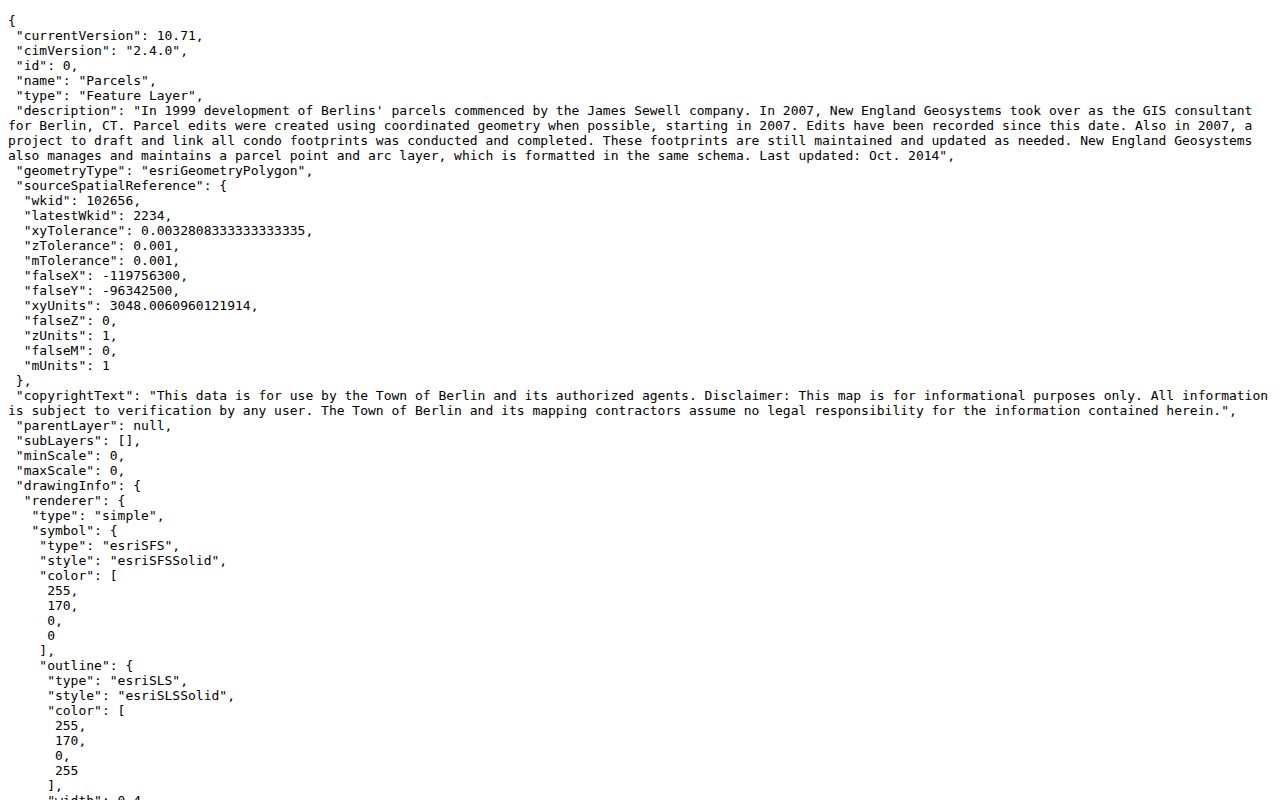
The layer fields connect MAP, LOT, UNIT, MBL, OWNER_NAME, LOCATION, and mailing data, but no occupancy field appears in the public parcel record.
Berlin Neighbor Parcels Are Not Household Lists
A Berlin adjacent parcel is a Berlin geographic neighbor, not a Berlin household, Berlin occupant, Berlin relationship, or Berlin contact.
MapXpress may show an owner, mailing address, parcel, value, sale, and building fields. It does not show every person who uses the property, the size of a household, guests, or private contact information. A condo unit may show a multi-owner comment, and an entity or trust may appear instead of a personal name.
- Owner
- The person or entity named in the parcel record.
- Location
- The physical situs line used to place the parcel on the map.
- Mailing address
- The destination for owner or tax correspondence, which may be outside Berlin.
- Adjacent parcel
- A geographic neighbor on the map, not evidence of a personal connection.
Use those terms in every Berlin neighbors note. The distinction keeps a map result from becoming an unsupported statement about a household.
Berlin Neighbor Voter Limits at Block Scale
Berlin voter data can describe a Berlin residence field and Berlin district, but protected Berlin voters may not appear in the public Berlin view.
Connecticut voter information can include name, residence and district, party affiliation, status, list-maintenance fields, birth year, and election history after local updates. It does not show ballot choice, Social Security number, full date of birth, signature image, or protected substitute-address information. A protected voter may be absent from the public registry without being absent from the block.
The complete state voter file is a $300 CSV request with a purpose certification. The form limits use to election-related, scholarly, journalistic, political, or governmental purposes and prohibits personal, private, commercial, advertising, marketing, harassment, and unauthorized display uses. MyVote is a voter-facing lookup, not a block-wide export.
SOTS voter privacy and public-field guidance explains the public and protected split.
Search Deeds Behind Berlin Neighboring Parcels
For Berlin neighboring parcels, a Berlin MBL, Berlin owner, Berlin date, Berlin instrument, and Berlin legal description make the deed trail testable.
After the map supplies adjacent parcel IDs, use the legal identifier and owner name in SearchIQS. Search Party 1 and Party 2, add a date range, and compare deed, map, mortgage, lien, and foreclosure descriptions. The recorded legal description may connect a current parcel to an older lot or unit even when the street line changed.
Berlin land-record coverage includes an online index and images from 1972, older grantor and grantee books from 1956-1971, record-book images from 1949-1971, and map indexing back to 1892 with image coverage from 1945. When a result falls outside the accessible online layer, ask the Town Clerk about the counter, microfilm, and older books.
Berlin Town Clerk land-record information is the local route for current copy and coverage questions.
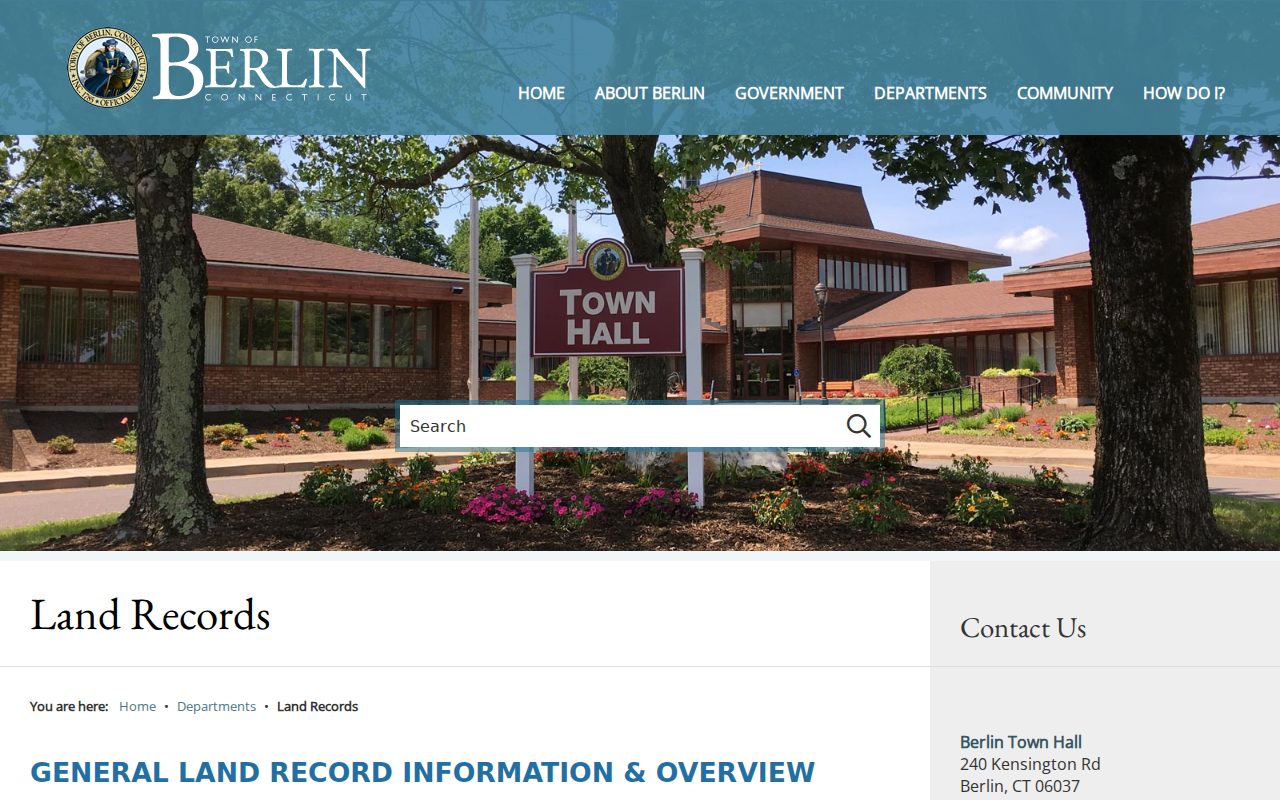
Deed history can explain parcel changes, but it still does not identify every person at the neighboring address.
Berlin Neighborhood Watch Has No Member Roster
Berlin Neighborhood Watch is a Berlin civic contact, not a Berlin street roster, Berlin membership file, Berlin resident directory, or Berlin people search.
Berlin Police Community Relations and Neighborhood Watch provide a civic route for residents who want to organize or share safety information. The official pages identify community contacts, but they do not publish a street-by-street member directory. The town also names communication tools such as Nextdoor, Neighbors by Ring, and Facebook Berlin Police as neighborhood information channels, not public-record databases.
The Community Relations Team lists crimewatch@berlinpd.org and 860-828-7000. The Block Watch information gives 860-828-7080 as a contact route. Use the official town page for the current contact and do not scrape, infer, or publish a private group roster.
Berlin Police Community Relations explains the local Neighborhood Watch route.
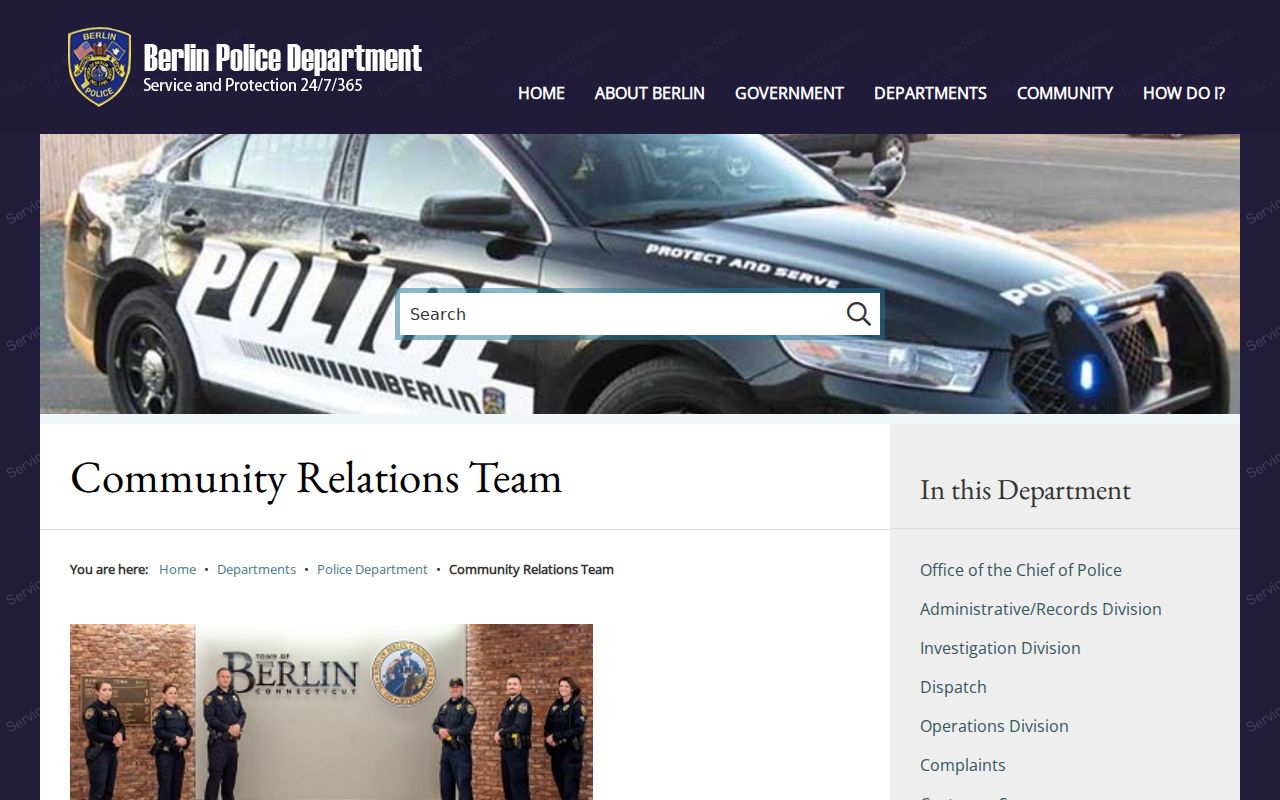
The page supports a civic contact, not a public neighbors list.
Berlin Neighbor Civic and History Layers
Berlin-Peck, the Berlin Historical Society, and Berlin public boards add place context while keeping a Berlin block's personal details limited.
When the goal is to understand a block rather than identify a person, local institutions add useful context. Berlin-Peck can search the Historical Name Index, yearbooks, newspapers, and local collections. The Historical Society can discuss photographs, family papers, oral history, and buildings by appointment. Town boards and commissions publish agendas and minutes with public officials and meeting participants.
| Contact layer | What it can add | What it does not provide |
|---|---|---|
| Berlin-Peck Local History Room | Names, yearbooks, newspapers, house-history tools | Current block roster |
| Berlin Historical Society | Photographs, oral history, family and building context | Public member directory |
| Town boards and commissions | Public agendas, minutes, and named appointees | Every neighborhood resident |
| Cemetery Committee and churches | Burial and family-history leads | Verified online interment list |
These sources make a Berlin block legible without pretending that civic participation equals residence at a particular parcel.
No Verified Berlin HOA Directory
No verified Berlin HOA directory was located, so a Berlin sign or Berlin deed clue should not become an invented Berlin roster.
No official Berlin-wide HOA, neighborhood-council, condominium-association, or civic-club member directory is identified. That negative finding matters. A map can show adjacent parcels, and a police page can offer a community contact, but neither supports an invented association name or roster.
If a specific association is known from a deed, condominium document, public agenda, or sign, identify the filing or custodian and ask for the public record that actually exists. Keep private membership details out of a general neighbors lookup.
Official Berlin Records and Neighbor Tools
Official Berlin records show a Berlin source, Berlin date, Berlin field meaning, and Berlin correction route that commercial neighbor tools may blur.
Commercial neighbor tools often combine public parcel, directory, voter, court, license, and marketing data into a profile. They can merge same-name records, show stale addresses, charge for reports, and offer unclear correction paths. Official Berlin and Connecticut custodians are slower in some cases, but their record type, date, access rule, and correction route are visible.
| Question | Official route | What to verify |
|---|---|---|
| Which parcel touches this one? | Berlin GIS viewer | Map date, layer, MBL, and polygon |
| Who is named as owner? | MapXpress and Town Clerk records | Owner field, mailing address, deed date, and legal description |
| Was a name present in an earlier year? | Directory, census, newspaper, or yearbook | Exact year, town label, page, and source quality |
| Is a voter record public? | MyVote, registrars, or lawful SOTS request | Protected-voter and permitted-use rules |
A category profile cannot replace a custodian's record. Use an official source when the fact needs a date, correction path, or legal access rule.
Berlin Privacy Limits on Neighbors
Berlin privacy rules keep a Berlin parcel, Berlin voter record, Berlin court entry, Berlin map, and Berlin community contact from becoming a personal dossier.
Adjacent parcel ownership does not identify other occupants, household size, children, guests, private contact details, or protected voters. DMV data, utility customers, sealed court records, confidential vital files, and private group rosters remain outside an ordinary block lookup. A historical directory is date-specific and can carry an old postal or community label.
Lawful use. Berlin neighbors research is for personal, lawful civic and place-history questions. Do not use parcel, voter, court, map, or community information to stalk, harass, threaten, intimidate, or harm anyone.
State the source and date with every claim. If a record is wrong, contact the custodian: the Assessor for parcel attributes, the Town Clerk for land records, the registrars or SOTS for voter matters, and the relevant court or state office for protected records.