
Berlin Directory Years on Record
Berlin's directory trail is date-specific: a Berlin year, Berlin town label, and Berlin shelf or reel identify what the entry can actually prove.
This Berlin city directory trail is a collection of dated sources, not one continuously updated Berlin resident file.
The strongest verified city-directory trail for Berlin begins with the National Archives inventory and continues through regional mid-century finding aids. The holdings are not a single unbroken run. A collection may be a catalog entry, a microfilm reel, an image database, or a local shelf item that needs an appointment. Check the title page and the actual access route before treating a year as complete.
| Collection | Years | Where held | Access |
|---|---|---|---|
| NARA regional directories | 1914, 1922, 1930 | NARA inventory, library, or microfilm route | Regional volume; Cromwell and Rocky Hill also appear |
| Berlin and Kensington reels | 1954-1956, 1956-1957, 1957-1958, 1959 | Gale finding aid and licensed library access | Confirm original publisher and image access |
| Historical Name Index | Mostly historical; some recent obituaries | Berlin-Peck Local History Room and linked database | Appointment route; sparse entries possible |
| Berlin High School yearbooks | 1937-2010, with print copies beyond | Berlin-Peck and Internet Archive | OCR needs page-image checking |
| Local newspaper titles | Berlin Weekly News 1891-1892; Berlin News 1892 | Connecticut State Library digital title list | Use for notices, obituaries, and civic names |
NARA's city-directory inventory is the source for the three early Berlin years used here.
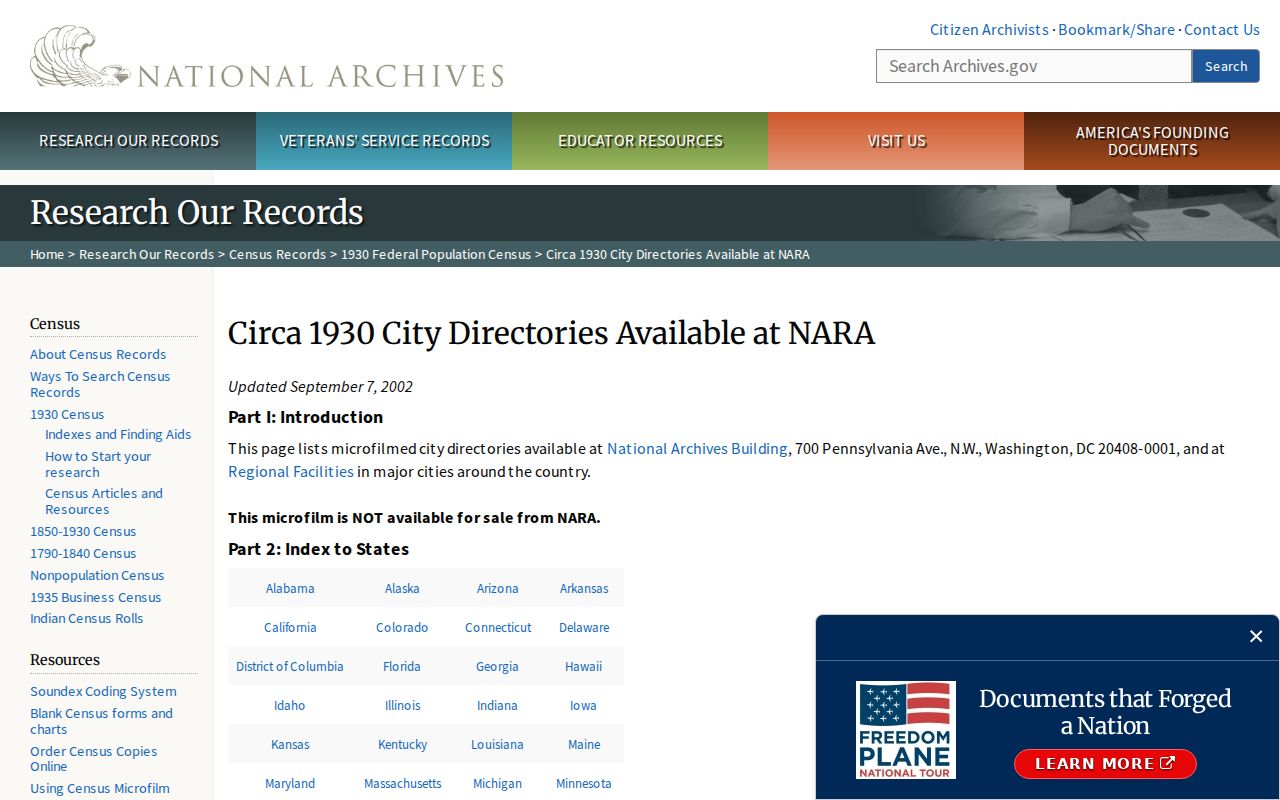
The capture shows an inventory, not a page image of a Berlin entry, so an exact sample name or line should not be invented from it.
Mid-Century Berlin Directory Reels from Kensington
The mid-century Berlin material may place Berlin and Kensington on neighboring reels, so a Berlin search should confirm the reel title and community heading.
Read each city directory reel as a separate Berlin city directory source until the title, publisher, and shelf details are confirmed.
The Gale and Primary Source Media catalog is a finding aid for regional reels that pair Berlin with Kensington. It identifies listings for 1954-1956, 1956-1957, 1957-1958, and 1959. Those labels suggest a useful bridge between the early NARA inventory and later local-history work, but the catalog does not expose every original title page or prove that a Berlin volume is on a Berlin-Peck shelf.
Ask a library staff member for the exact reel, title, publisher imprint, and image or microfilm location. Record whether the item is alphabetic, street-ordered, telephone-ordered, or a regional business directory. A regional volume may list Berlin residents in a town section while placing a neighboring place in the same book.
The strongest citation is the volume's printed title page, followed by the page number and the town section used. A catalog snippet is a lead to that item.
Why Berlin Directories Use Other Labels
Berlin directories can name East Berlin, Kensington, or Berlin Station; those Berlin labels help explain why a modern Berlin street search misses an older entry.
Berlin's names change with the source. Kensington, East Berlin, Berlin Station, Berlin, and New Britain can all appear in a record trail, but they do not mean the same thing in every year. New Britain remained part of Berlin until 1850. Postal labels can also differ from a municipal situs. A directory search that uses only the modern town string can miss the very household being traced.
Test the source's own label first. Then compare the street, neighboring names, map, parcel, and legal description. For an old address, use the present Berlin parcel viewer only as the modern bridge. It does not prove that an old directory's community label was a formal boundary.
This label problem is a useful Berlin quirk. The record is not necessarily wrong because the town line looks unfamiliar; the date and the regional publisher may explain it.
Read a Berlin Directory Entry
Read a Berlin entry as a dated Berlin clue, then compare its Berlin street, occupation or household note, and neighboring names with another source.
A city directory entry becomes useful when the Berlin city directory year and page stay attached to the name.
A historical directory entry should be read as a set of fields, not as a modern identity profile. The Library of Congress directory guide describes common arrangements and entry elements, but it does not guarantee that every Berlin volume uses every field. Treat the actual page as the authority.
A useful entry inventory may include:
- Alphabetic surname and given name, sometimes with an initial, nickname, widow notation, or spouse reference.
- Street or numerical address, which may use an older number, a postal label, or a regional town section.
- Telephone number when the volume includes telephone listings.
- Occupation, business, or civic role when the publisher collected it.
- Cross-reference marks and an abbreviation key that explain how the address or household line is arranged.
- Criss-cross directory
- An address-first or reverse section that moves from a street or telephone listing to a name.
- Householder index
- A name or household arrangement that points to an address without promising that every person at the address is listed.
- Abbreviation key
- The publisher's short-code list for occupations, relationships, telephone status, or address notes.
Do not silently expand an abbreviation. Copy the line, note the page, and compare it with a second source before making a family or address claim.
Berlin Directory Sections by Name and Street
A city directory can have more than one path to the same person. The alphabetic section is best for a known surname. A street or numerical section is better when the address is known but the name is not. A telephone section can add a number or subscriber clue for the years in which that format was printed. Business and classified sections may add an organization or trade name.
Run the same search in both directions when the volume allows. Use the street section to find a household line, then check the alphabetic section for a cross-reference or related entry. If the address uses Kensington or East Berlin, search that town section before assuming the page is outside present-day Berlin.
The result is a dated presence or address clue. It is not a deed, a certified vital record, or proof that the named person stayed at the address for the whole year.
Berlin-Peck's Historical Name Index for Directory Research
Berlin-Peck's index can surface a Berlin family when the Berlin directory shelf is sparse, but a Berlin name-only entry needs independent context.
The Berlin-Peck Local History Room is the most local route for a Berlin, East Berlin, or Kensington family question. The Historical Name Index may contain only a name when the surviving source is sparse. The library describes it as mostly historical, with some recent obituaries. It is a finding aid, not a complete current resident directory.
Berlin-Peck's Local History Room page describes in-library materials, Town Historian and volunteer support, public computers, appointment arrangements, and linked genealogy tools.
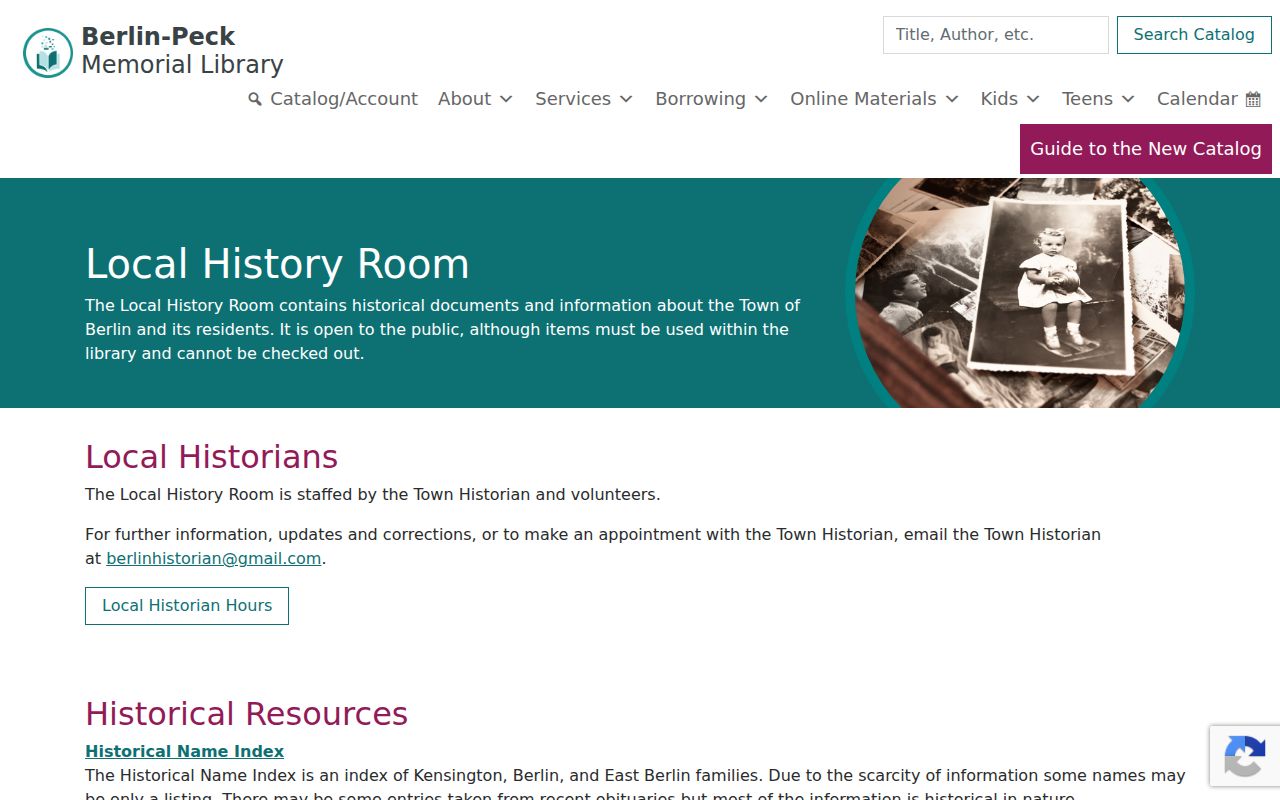
Use the library's search link, then ask for help when a database is inaccessible or a one-name result needs context. Staff can also point to land-record handouts, newspapers, FamilySearch, and the State Library.
Yearbooks as a Dated Berlin Directory
Berlin High School yearbooks cover 1937 through 2010 on the library's collection page. They are not city directories, but they supply dated names, photographs, class groupings, clubs, and school connections when a directory run is missing. Print copies through the current year are held in the Local History Room, and digitized archive copies are linked through Internet Archive.
Berlin-Peck's yearbook collection page explains the local and digital routes.

Automatic OCR can misread names. Search several spellings, then confirm the result on the scanned page image. A yearbook establishes school affiliation at a time, not a current address.
Berlin Newspapers Beside Directory Years
The Connecticut State Library title list identifies Berlin Weekly News for 1891-1892 and Berlin News for 1892. These short runs can carry obituary notices, property transfers, church and school news, civic appointments, and local events. Berlin-Peck also links research access for the Berlin Citizen and New Britain Herald, which can broaden the search when a Berlin notice was printed in a regional paper.
Search Berlin, East Berlin, Kensington, New Britain, and the neighboring towns used by a regional publisher. An obituary may name a former address, spouse, relatives, funeral home, cemetery, or organization. Confirm the death and relationship with a Town Clerk or DPH record and use probate when an estate question remains.
Connecticut State Library newspaper holdings explain the print, microfilm, and digital routes.
Pair Berlin Directory Years with the Census
A Berlin directory year and a Berlin census year make a stronger historical pair than either Berlin source alone.
The city directory supplies a dated listing; the census can add household structure, but neither source should be treated as a current Berlin roster.
Directory and census years are close clues, not identical snapshots. A directory may reflect collection before its printed year. The federal census records an April snapshot, and the newest public federal census is 1950 under the 72-year rule. Compare street, household names, ages, occupations, and nearby names rather than expecting every field to match.
- Copy the directory year, publisher, town section, street, page, and exact entry.
- Search the closest public census year by Berlin, Kensington, East Berlin, or the regional enumeration geography.
- Compare household members, ages, occupation, neighbors, and street or district clues.
- Use a deed, newspaper, map, probate file, or vital record to confirm the date that matters.
The Connecticut State Library census guide is the safer starting point for catalog and access details.
Berlin Directories, Maps, and House History
Directories become more useful when the address is tested against the built landscape. The Library of Congress record for Berlin's 1914 Sanborn set has nine sheets. Related records identify Berlin editions from 1887, 1895, and 1901. The maps can show building footprints, street names, commercial or residential context, and nearby landmarks, but they do not name occupants.
Berlin-Peck links a “Who's Lived in Your House?” handout and a land-record guide. The Connecticut State Library old-house guide adds maps, land records, WPA surveys, HABS, USGS material, and Sanborn routes. Berlin Historical Society, with its museum and 1771 House, can add photographs, oral history, vertical files, and family papers by appointment.
Connecticut's old-house research guide is a useful bridge when a directory entry needs a physical place check.
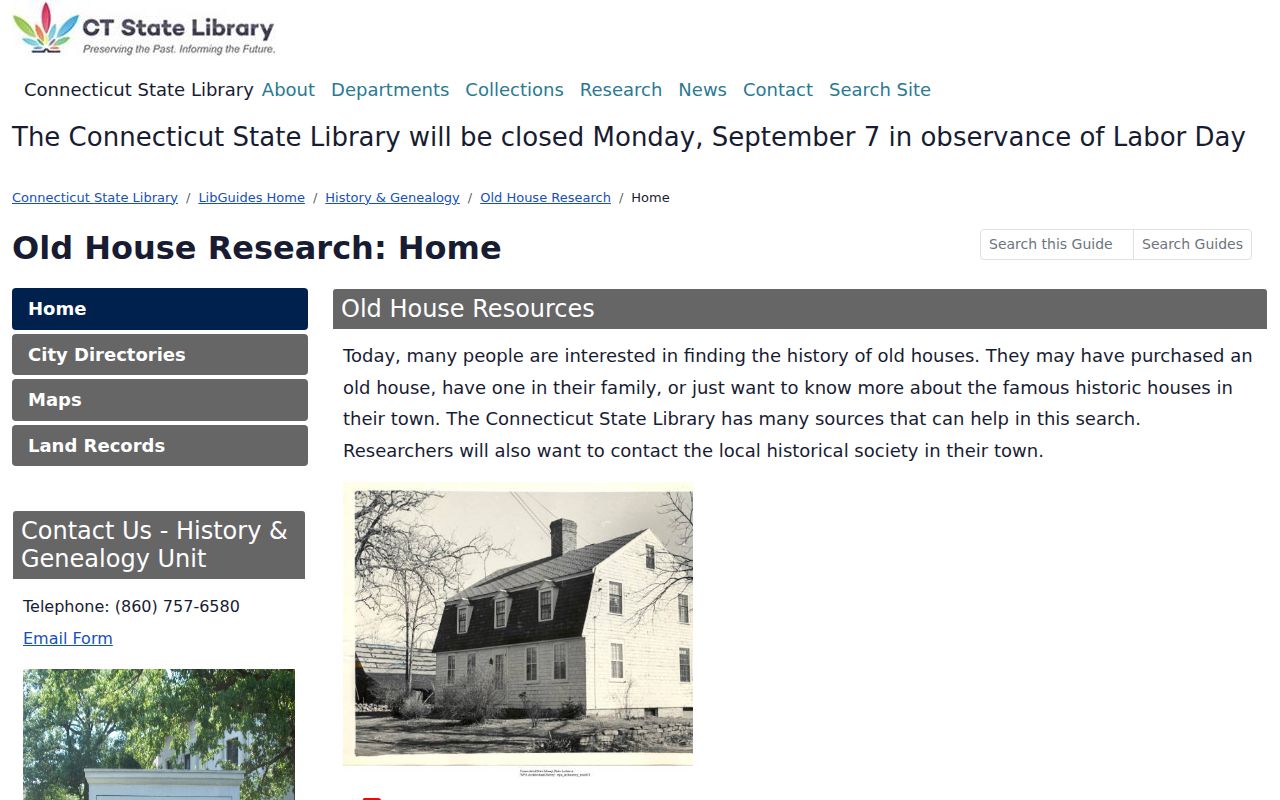
Label every map by edition date. A structure shown in 1914 can support address continuity, but it cannot identify who lived there without a people record.
Trace a Berlin Household Through Berlin Directories
Tracing a Berlin household means testing each Berlin year, Berlin address label, and Berlin source rather than assuming the same name marks the same person.
A city directory sequence can show a Berlin address over time while still leaving gaps between one Berlin city directory volume and the next.
A careful directory trail moves from a current parcel or known address to the right historical label, then through each dated collection without filling gaps by guesswork. The strongest chain is a current parcel, an old directory line, a census or newspaper check, and a deed, probate, vital, or map record that explains the change.
- Write the current street spelling, parcel or legal identifier, and community label.
- Test the NARA years and the mid-century Berlin-Kensington reels for the same street or household.
- Check the alphabetic and street sections, preserving abbreviation keys and page references.
- Pair the dated entry with a census, yearbook, newspaper, map, land record, or probate result.
- State what the entry proves and what it leaves open, especially when the library index is sparse.
This is the value of a Berlin city directory: it can put a name beside an address at a particular time while leaving the modern identity and ownership questions to their proper custodians.