
How to Find Berlin Residents
Every Berlin lookup works best when you write down three things first. Note the street label, the date of the result, and the office that supplied it. That habit keeps a residents directory search honest. It also helps when two offices disagree.
Berlin has no single master list of who lives in town. Connecticut shut down county government in 1960. Hartford County survives only as a geographic and court label. So there is no county recorder to call for a Berlin deed. The Berlin Town Clerk acts as the local hub instead. That office keeps land records, vital statistics, trade names, election files, cemetery contacts, and other municipal papers. The Assessor holds parcel information. Voter rolls, court records, vital files, credentials, and criminal-history systems all sit with state offices.
Let the clue you already have set the route. An address belongs in MapXpress. An owner name can carry you to the parcel and then to SearchIQS. Court questions go to the New Britain Judicial District portals. Family-history questions often fit better at Berlin-Peck. Or they fit at the Connecticut State Library. Either beats any current resident roll.
- Search Berlin MapXpress by owner, house number and street, parcel ID, or unique ID. Save the parcel, location, mailing fields, and sale date.
- Use the parcel's MBL or owner name in the Berlin land-record index at SearchIQS. Treat the index as a lead until the recorded instrument is checked.
- For a voter question, use Connecticut MyVote or contact the Berlin registrars. A missing result may reflect a protected record, a name mismatch, or list maintenance.
- For a case, search the civil party index or the New Britain pending criminal and motor-vehicle portal. Read the court, docket, date, and status together.
- For an older household, move to Berlin-Peck, the State Library, directories, yearbooks, newspapers, maps, and probate. Historical evidence establishes a date-specific connection, not a current residence.
Berlin Resident Records Offices
No single office answers every Berlin record question. The work is split between the town and the state. There is no active Hartford County clerk. There is no county recorder to phone about a Berlin deed. The Town Clerk at Town Hall records land and vital files. That office makes the natural first stop. The Assessor, registrars, court clerks, and state custodians each control their own separate sets. A resident lookup in Berlin usually means visiting more than one of them.
Berlin Assessor
Room 106, 240 Kensington Road
Berlin, CT 06037
860-828-7067
Town Hall posts its hours as Monday through Wednesday 8:30 a.m. to 4:30 p.m., Thursday 8:30 a.m. to 7 p.m., and Friday 8:30 a.m. to 1 p.m. Those windows are not guarantees for everything. Older record books, certified copies, and in-person terminals may need an appointment or a staff member on hand. Call ahead before making the trip for any of those.
Berlin MapXpress Starts the Parcel Trail
MapXpress is the natural first stop when a street address is your starting clue. The portal accepts an owner name, house number, street, parcel ID, or unique ID. A result opens onto parcel details and a quick map. It also shows the property card, an assessor PDF map, and the GIS view. That makes it the local address key for any Berlin parcel search. The portal itself says property information updates nightly. Parcel maps carry a July 2026 label. The current parcel count stands near 9,103.
Read that freshness notice carefully. It describes the portal's schedule, not a promise that every field changes at once. Always preserve the result date next to any owner or mailing field you copy. A parcel row can list an owner, the physical location, a mailing address, a sale date, and building facts. It will not name every person at the address. For that, a street directory or residents directory approach needs more than one source.
| MapXpress field | Format | What it helps answer |
|---|---|---|
| Name | Text | Which parcels use an owner-name string |
| House No | Text | Which parcel matches a street number |
| Street | Dropdown | Which current street label the portal recognizes |
| Parcel Id | Text | Whether a known parcel format returns a match |
| Unique ID | Text | Which GIS identifier connects map and record |
Start with the official MapXpress search rather than a name-only hit from some other site. The owner field anchors a parcel. It does not prove anyone lives there. Berlin's public MapXpress screen lays out the search controls that open an address lookup.
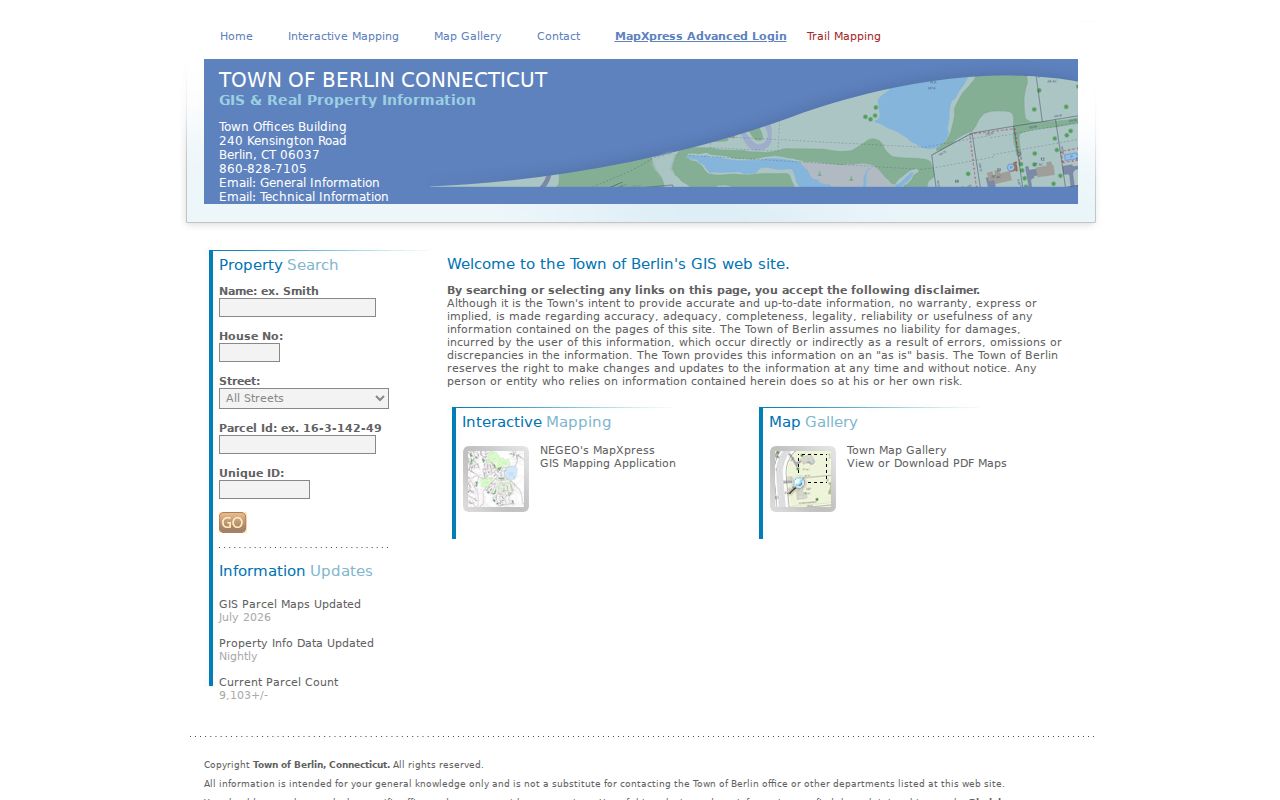
The field order makes the parcel route concrete. When a name is common, narrow by street and house number first, then carry the MBL or unique ID into the next record set.
Mailing Address Is Only a Clue
A Berlin mailing line can describe an owner who lives elsewhere. The situs line locates the parcel itself. Compare both before calling anyone a Berlin resident.
Berlin parcel data keeps the physical location separate from the address used for tax mail. The ArcGIS parcel layer exposes OWNER_NAME, LOCATION, STREET, HOUSE_NO, MAIL_ADDR, MAIL_CITY, MAIL_STATE, and MAIL_ZIP. A mailing address may sit outside Berlin. The owner may be an entity, a trust, or a condominium owner. A tax bill also warns that payment information proves neither title nor occupancy.
Keep the fields side by side when comparing records. The same person may show up as a deed grantee, a MapXpress owner, a MyTaxBill taxpayer, and a registered voter at a protected or different address. Those are separate facts with separate dates.
- Owner name
- The person or entity named in the parcel record, not a list of all people who use the property.
- Situs address
- The physical location of the parcel. MapXpress labels it as the location or street address.
- Mailing address
- The destination for tax or owner correspondence. It can be in another city or state.
- Parcel or MBL
- A land identifier that can connect a current map record to a deed even when street wording changes.
Current Berlin Resident Records
Treat the table as a routing map for Berlin. Each records office answers a different question. A Berlin result still needs a date and a source label.
A Berlin source is strongest when the date stays visible. So do the office, record type, and identity clue. Each source below answers a narrower question than a complete residents directory. Match the source to the question. Then confirm important identity or date claims with a second custodian.
| Source | What it lists | Keeper | Access |
|---|---|---|---|
| MapXpress parcel record | Owner, situs, mailing, parcel, value, sale and building fields | Berlin Assessor | Free public search |
| MyVote lookup | Voter-facing registration and district information | Connecticut SOTS and Berlin registrars | Official lookup; field details vary |
| SearchIQS land index | Parties to deeds, liens, maps, and foreclosure registrations | Berlin Town Clerk | Guest index; images may cost |
| Civil and criminal indexes | Party or defendant, docket, court, and status fields | New Britain Judicial District | Free web indexes; retention limits |
| eLicense and business search | Credential or entity affiliation and address fields | Connecticut state offices | Free public searches |
A parcel record makes the sturdiest first anchor for a street question in Berlin, since it ties an address to an owner of record. A court result, by contrast, is only a case index. Voter records round out the picture, though public-field and safety rules limit what they show, and no single system amounts to a full household roll.
Official Rolls Versus Profile Sites
Official Berlin records come with a custodian and rules. Each record type answers to a specific office. A commercial profile site flattens those distinctions into one page. Berlin users comparing a paid profile against a property roll or voter roll should keep the underlying source attached. That habit matters. A parcel entry from the assessor means something different from a marketing list, and the correction route differs too.
| Question | Official Berlin or state route | What to verify |
|---|---|---|
| Who is named with a parcel? | MapXpress, Assessor, Town Clerk | Owner, location, mailing address, date, and legal identifier |
| Was a person registered? | MyVote, Berlin registrars, SOTS | Public field, update timing, privacy status, and lawful purpose |
| Was a person in a case? | New Britain Judicial District | Party, docket, court, date, status, and retention rule |
| Who lived at an old address? | Directories, census, newspapers, maps, probate | Exact year, town label, page, and independent confirmation |
Treat a profile as a lead. The record date and record type should travel with every result, because the custodian, not the aggregator, is the authority a Berlin lookup ultimately rests on.
Berlin Owners and the Deed Trail
A Berlin deed search works best when the owner name, parcel identifier, and recording date travel together from one search to the next. Start there. SearchIQS now hosts Berlin land records online. The coverage has layers. Indexed and imaged land records begin January 3, 1972. Foreclosure registrations start November 4, 2011. Map images run from March 27, 1945, while maps dated October 1, 1892 through March 26, 1945 appear only in the index. Grantor and grantee index books bridge 1956 through 1971, and record-book images cover September 12, 1949 through December 30, 1971.
Search the current owner as Party 1 or Party 2. Add a recorded-date range and a deed or transfer description. The seller becomes your next lead. Test that name as an earlier grantee in the older books, which may require the Town Clerk counter, local microfilm, or a library appointment. Berlin's Town Clerk land-record page explains the local portal and the fraud-alert route.
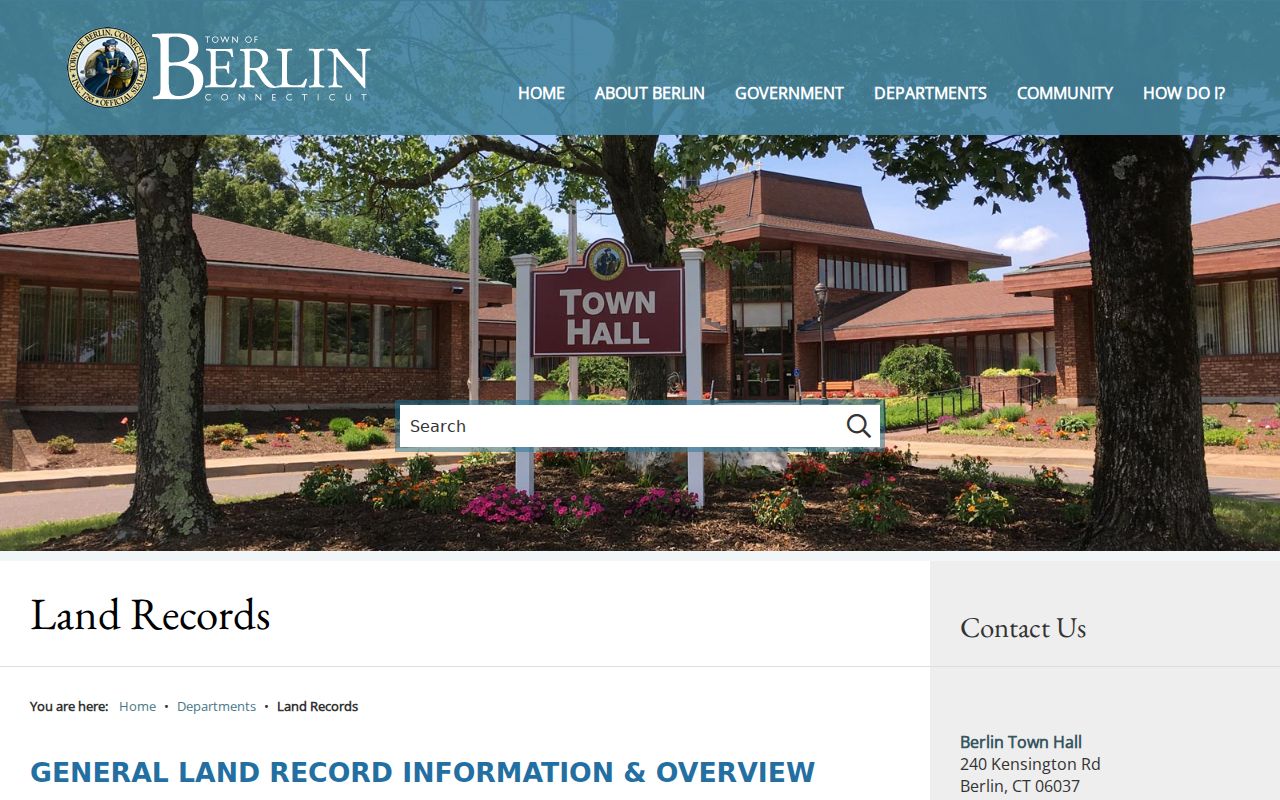
Check there for current copy charges. The Town Clerk page also says whether a pre-1972 record should be requested in person rather than through the online portal.
Berlin Voter Records Have Boundaries
A Berlin voter result is an election record. It is not a household census for Berlin. Protected status and public-field limits can explain a non-match. MyVote is a voter-facing lookup rather than a public roster of every person in town, and the state's public fields are narrower than many people expect. Connecticut guidance makes name, residence and district information, party affiliation, registration status, and election history public after the town updates them. Ballot choices never appear. Full birth dates and substitute addresses stay hidden too. The complete file is a different request. The Secretary of the State form lists a $300 CSV option with requester and mailing fields, payment, a signature, and a permitted-purpose certification. Approved purposes are election-related, scholarly, journalistic, political, or governmental. The form bars personal, private, commercial, advertising, marketing, harassment, and unauthorized display uses.
Separately, the SOTS voter privacy program is not the same as Safe at Home. A voter who swears that disclosure creates a safety risk can limit the official registry without moving. That protection has edges. It will not erase a matching land, court, newspaper, or business record. Connecticut voter privacy and public-field guidance explains why a missing name should not be read as proof of absence.
Ask your lawful, personal question through the official lookup. Corrections belong with the Berlin registrars or SOTS, not with attempts to reconstruct a protected record.
New Britain Courts Serve Berlin
Berlin cases travel to New Britain. The town has no municipal trial court of its own. The official court directory sends civil and family matters to the New Britain Judicial District, with civil locations HHB and H15N. The criminal and motor-vehicle portal uses the New Britain district and GA15. Probate is different again. Berlin Probate District PD-08 sits in New Britain too. A last name is required for the civil search. First name, location, case category, case type, sort order, and match mode are optional. Match modes include starts with, contains, equal to, and sounds like. A result row can show Party Name, Case Name, Docket Number, Court Location, Party Number, self-representation, and a paperless-document icon. That row is only an index hit. It does not prove identity, disposition, or current residence. Open the Connecticut civil party search and pick the New Britain location before trusting a name match.
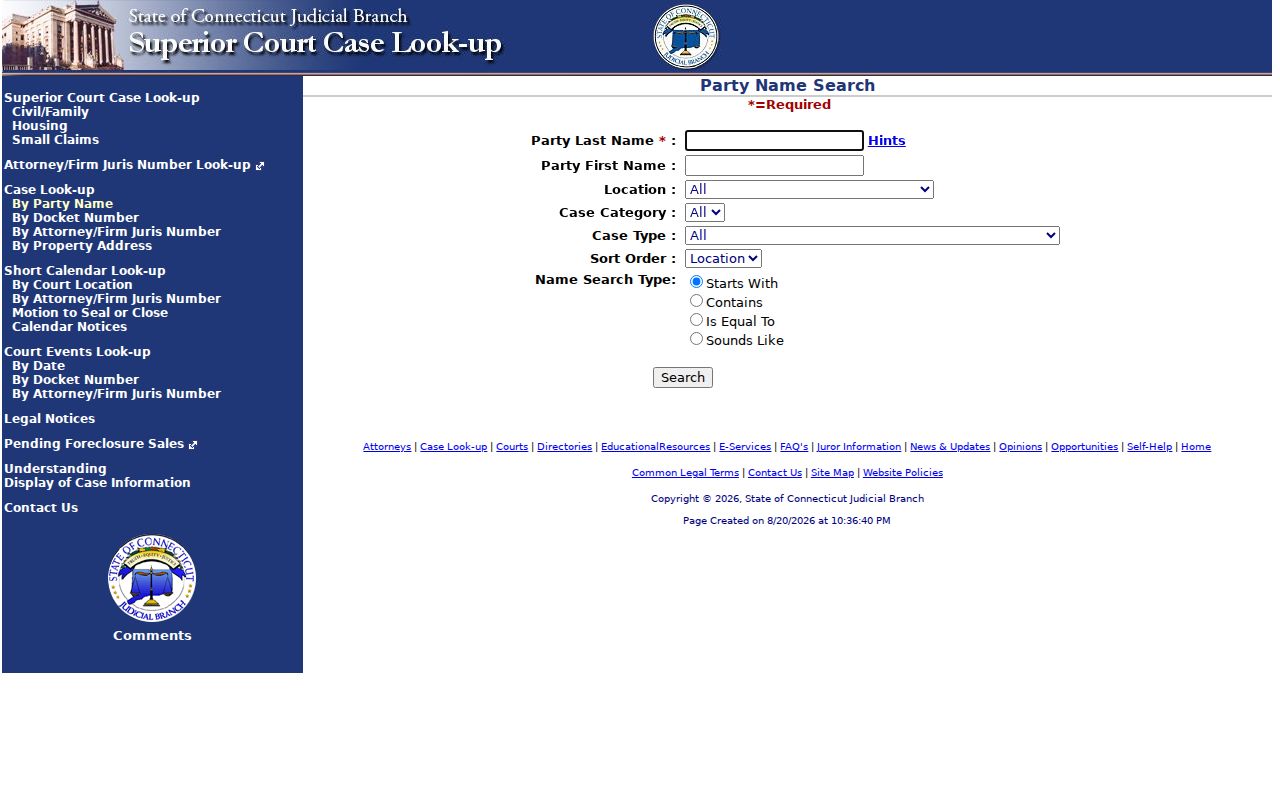
Sealed matters, juvenile records, and protected family details may stay offline. Older files often need the clerk, so bring the docket number and court location when requesting anything.
Berlin Vital Records: Town or State
Berlin vital records sit in two places: the Town Clerk and the state. A single Berlin family-history clue may require both offices.
For events tied to Berlin, East Berlin, or Kensington, the Town Clerk and Registrar of Vital Statistics at 240 Kensington Road handles the local route. The Connecticut Department of Public Health keeps state copies from July 1, 1897 forward. DPH itself says a town office is usually the faster stop. State processing can run up to 12 weeks.
Access depends on the record type. Birth records under 100 years old are restricted under CGS §7-51. Once births reach 100 years, they become public. Statutory redactions and confidential files are still withheld. Anyone 18 or older may buy certified marriage and death records under CGS §7-51a. Social Security number sections stay restricted, though. Fees differ between town and state, so confirm the current form and payment route first.
The Berlin birth-request form asks for plenty. It wants the name on the certificate, date and place of birth, parents' names, requester information, relationship, reason, signature, identification, and payment choice. A certificate request is not a name search. An old index is not a certified copy, either.
When Berlin Records Go Offline
Some Berlin records simply have no public search box. Berlin-Peck, the State Library, and Berlin town offices can still point to the right shelf, counter, or request route.
Consider the gaps. The Building Department takes permit applications through CitySquared and printable submissions. But it publishes no complete public permit-result index by address. Cemetery records list a named committee and grounds, yet no interment search exists. Historical voter books and neighborhood membership rosters are not online either.
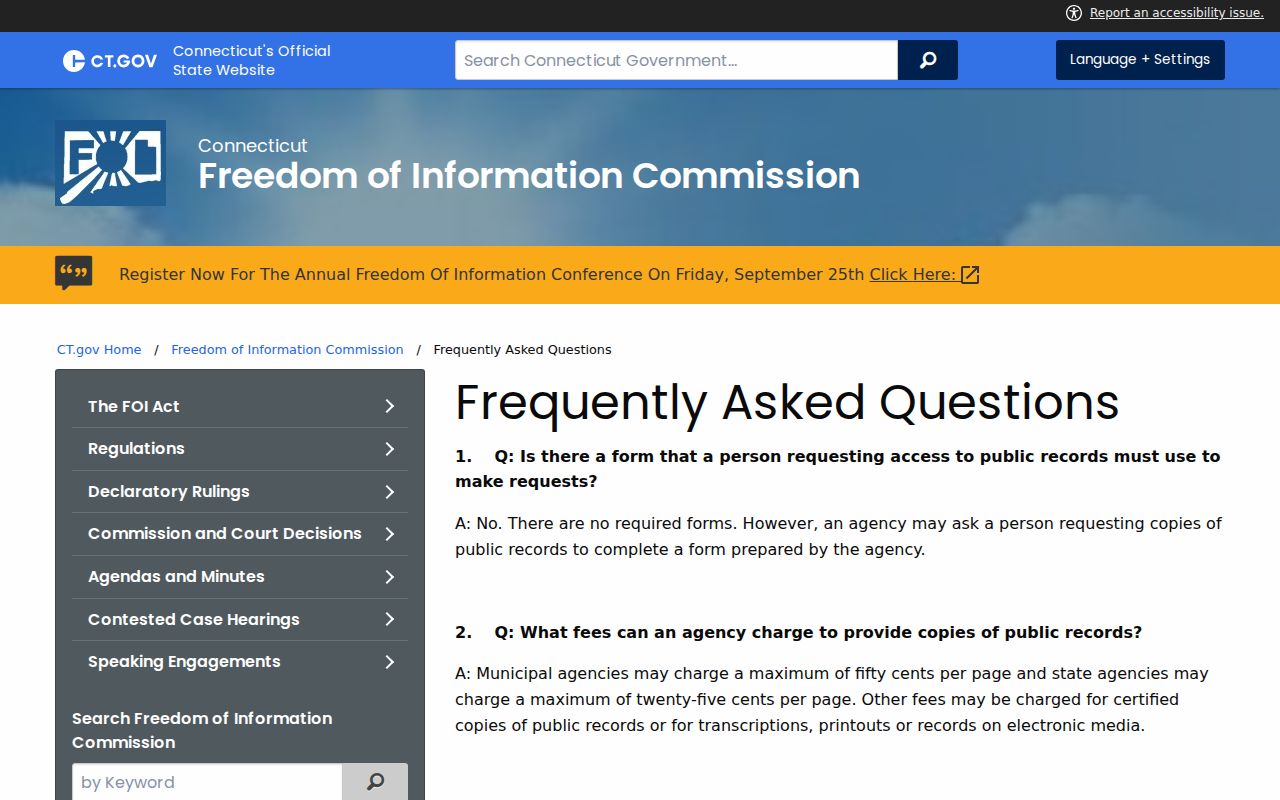
When a public agency holds the record, the Connecticut Freedom of Information Act applies. That law is Chapter 14, CGS §§1-200 through 1-242. Ask the agency that keeps the record, not a nonexistent county clerk. Specify the office, record class, name or parcel, address, date range. Say whether you want inspection, ordinary copies, certified copies, or electronic delivery. Inspection requests may be oral; an agency can require writing for copies. The Connecticut FOI guidance covers copy fees, prompt access, and complaint timing.
Berlin's general inquiry form can route a question. But it is no substitute for a precise FOIA request.
When the gap is historical rather than administrative, different doors open. Berlin-Peck, the State Library, Berlin Historical Society, NARA, LOC, and FamilySearch each offer their own shelves, catalogs, finding aids, and appointment routes.
Berlin ZIP Labels Need a USPS Check
A Berlin ZIP label points to a postal route, nothing more. A mailing label and a municipal boundary are different clues.
The Connecticut municipal directory lists East Berlin 06023 and Kensington or Berlin Station 06037 as the Berlin-area postal labels. Town Hall uses Berlin, CT 06037, while the recognized postal city can read Kensington or Berlin Station. A 2017 USPS bulletin records a label change for 06023, from Berlin 06037 to Plainville 06062. Postal labels describe delivery geography. They prove neither a municipal boundary nor a person's address.
Run the full street and unit through USPS by-address lookup, then compare the result with MapXpress LOCATION, MAIL_CITY, and MAIL_ZIP. When searching a directory or deed under an older community name, keep both the postal label and the municipal parcel fields.
Historical Berlin Resident Directories
Historical Berlin directories name people by year. Berlin newspapers and the Berlin-Peck collections can test whether that dated connection fits the address. A directory page, a newspaper, a map, and a probate clue should be compared. They should not be merged.
The strongest resident trail pairs a printed directory with a date and a street. It also pairs a second source with them. NARA identifies Berlin directory years 1914, 1922, and 1930. Cromwell and Rocky Hill appear in the same regional material. A Gale finding aid lists Berlin and Kensington reels covering 1954 through 1959. Berlin-Peck's Local History Room adds a Historical Name Index for Berlin, East Berlin, and Kensington families. It also holds yearbooks from 1937 through 2010.
The library cautions that some index entries carry only a name, because source material is scarce. That limitation is useful to know. Search the directory by both town label and street label. Then weigh the entry against census, newspaper, land, map, probate, or vital evidence. The full shelf route and entry-reading method live on the Berlin city directory collections page. Current address work belongs on the Street Directory page. For the appointment and local-collection route, Berlin-Peck Local History Room is the destination.
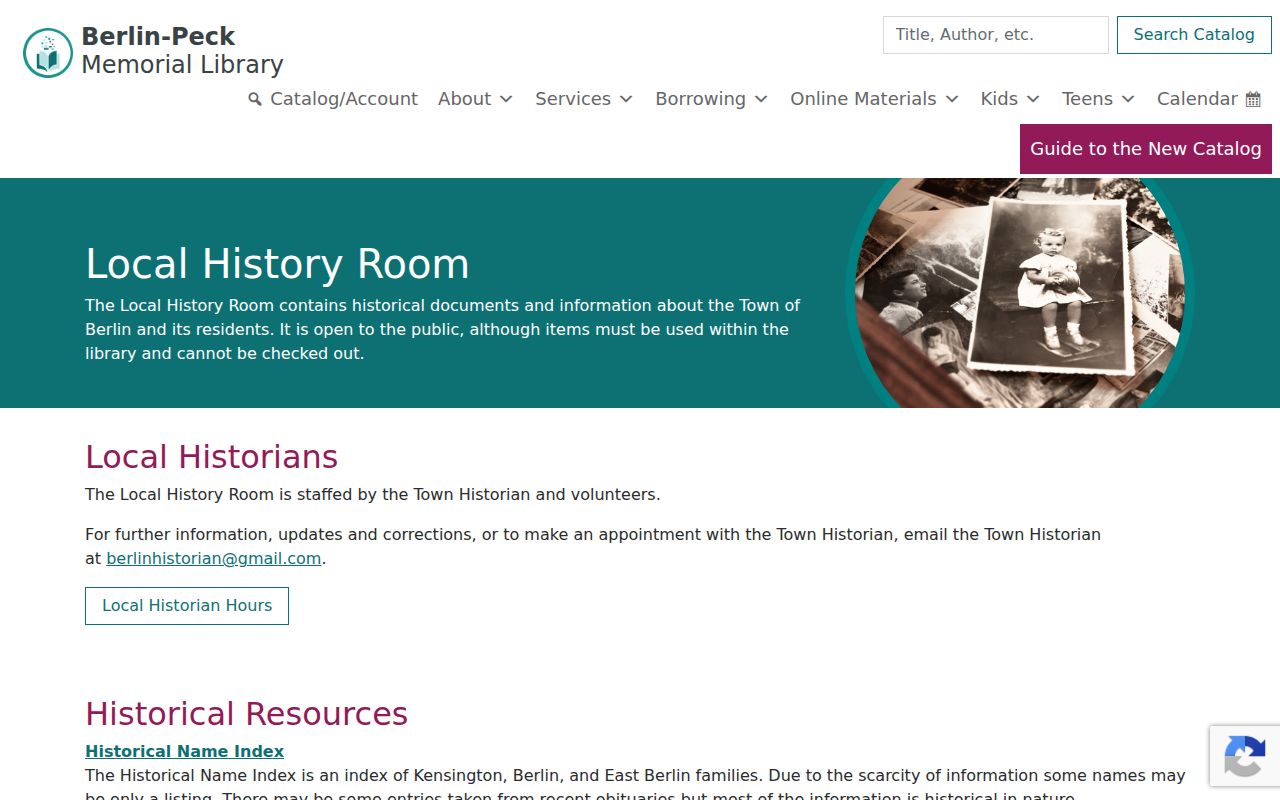
Those old shelf volumes link today's parcel questions to households of past Berlin residents.
What Berlin Records Cannot Tell You
A Berlin record can show a legal or historical connection without proving residence. Don't turn a Berlin clue into a present-tense claim.
Public parcel fields never reveal every resident, guest, child, or household member. DMV address and driving data stay restricted under the Driver's Privacy Protection Act. Connecticut rules add their own limits. Utility customer lists, protected voter addresses, sealed court matters, confidential vital files, and private community rosters stay closed, too. That holds even when a name is known.
Lawful use. Berlin records are reference points for personal, lawful research. Do not use a result to stalk, harass, threaten, or harm another person, and verify a consequential fact with the custodian before relying on it.
A bad entry in the Berlin records has a fix. But it starts with the right office. Parcel attribute errors belong to the Assessor. Town record problems go to the Town Clerk or the registrars. Voter questions are handled by the SOTS. Court-file issues rest with the Judicial Branch clerk. Vital amendments fall to DPH or the local registrar.